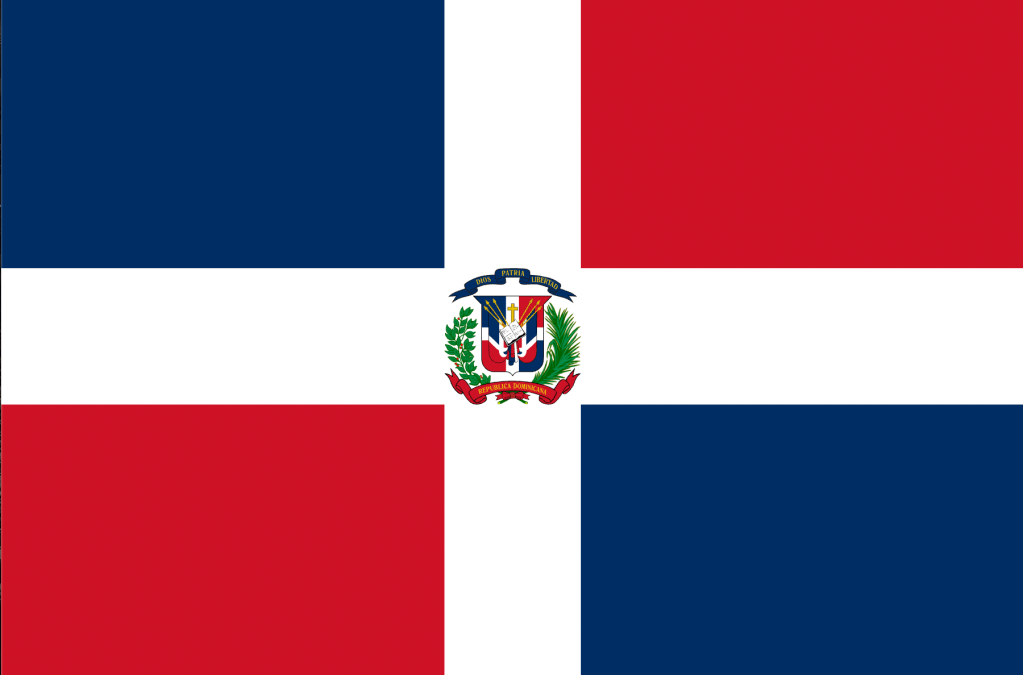
40 YEARS OLD, DAUGHTER OF THE DOMINICAN REPUBLIC.
Growing Up
I was born in Brooklyn. My family migrated from the Dominican Republic, my dad in the late 70s and my mom in the early 80s. I have one younger brother, who is two years younger than me, and a sister, who is four years younger than me.
I grew up in a household where we spoke Spanish. The TV, radio, and all conversations around me were in Spanish. I didn’t learn to speak English until I started kindergarten, around the age of 5. I was in the English language immersion program, meaning I learned English by being immersed in an English-only classroom. I had to go through a learning curve to learn English and to be able to do my homework. These weren’t things my parents could necessarily support or assist me with.
By the time my brother and sister started school, they were already fluent in English. That gave them an advantage. I helped them with their homework if they struggled and was even able to advocate for them at school. I helped pave a path for them. They had resources available to them that I didn’t have for myself. They turned to me when I had to turn to a neighbor, cousin, or uncle for help. But often, I figured it out on my own.
Some gendered norms and scripts exist, not just within Latin culture but broadly, nationally. There are gendered expectations of the eldest daughter that she has to contribute to domestic responsibilities like cooking, cleaning, and caretaking.
As my siblings and I started to get older, my brother started getting more freedom and independence. Compared to me, he was allowed to hang out with friends, stay out later, and travel further. My parents had a shorter leash on me. They were strict with my curfew, where I could go, with whom, and for how long. He wasn’t expected to help out with chores or take care of our younger sister. I remember growing up thinking, “I want to do my own thing.”
Immigrant families really push the idea of education. I grew up very humble; my parents were low-wage workers, my mom was a nanny, and my dad was a cab driver. Their idea was that education was the way out of poverty and that they worked as hard as they did so that we could go to school and become professionals. Education was very big in our house, but they weren’t very encouraging of me going away for college.
I’m a first-generation college student. I got my Ph.D. in psychology at the Graduate Center at CUNY, my M.A. at Hunter College, and my B.A. from Fordham University at Lincoln Center. I’m from New York, I did all my training in New York, and I never really left New York. That was never the case for my younger sister. Granted, she went to college still in New York State, but she was away in Syracuse. With me, I was the first one, and it was too hard for them. They didn’t want me to go away, even to Connecticut, and I got into the University of Hartford on a full-ride scholarship! With my sister, I was able to help advocate for her and let them see the benefits and advantages of her being able to go away to college. They loved the experience and being able to visit for the family weekend. And she also loved the experience of being away.
I’m the first one in my family to go to college, but not the last. Both my siblings went to college and got graduate degrees. My brother has an M.P.A., Master’s in Public Administration, and my sister has an M.S.W., Master’s in Social Work, and she’s also a therapist. So, I’d like to think that I had a little something to do with influencing or shaping her career trajectory.
A lot of the pressure to set an example for my siblings was internally driven. I wanted to do. I wanted to perform well. I was studious, and academics came easily for me, so I think it was harder for my siblings at times. My parents always said, “Look at your sister. Look at what she’s done. She’s on a roll.”
My parents are super proud and over the moon. My dad is the cutest thing; he has a collection of college baseball caps of all the colleges we attended. It’s so cool. So now I’m adding to the collection with all the colleges I’ve taught at.
The Psychology behind Being the Eldest
The research behind birth order and behavioral patterns is, like, 100 years old, and the findings are all over the place and debated. Firstborns have a unique experience in that they’re an only child before they become a sibling. Whereas younger siblings never have that experience of being an only child. I was very young when I became a sibling, only 2 years old. I don’t recall that time, but I’m sure it made an impression on me.
Being the oldest child, we often see a greater level of responsibility — taking on some of the caregiving, or being an assistant caregiver to younger siblings, with household responsibilities, also being able to share and knowing that we have to share our space and our parents’ affection and attention. These experiences allow us to be more independent and take more initiative.
Oftentimes in birth order research, we see that firstborn children tend to be high or overachieving and generally successful.
If caregivers are spread thin and over-rely on this older sibling to the point where the child is now taking on this parentified role, that can introduce undue stressors. They might have to figure out and navigate these on their own because they don’t have anyone else to turn to; maybe because they don’t feel like they can speak up on it for fear of adding burden or stress to an already stressed-out parent or caregiver. It can teach how to tolerate frustration and distress because one might have to sacrifice and compromise, having more opportunities to develop and hone stress response skills. In psychology, too much of anything is never good, and everything needs to be in moderation.
There are differences based on sex or gender that can make things a little harder for females in particular. Especially when you factor in the oppressive systems under which we live. In our society, they expect so much of us.
Stress and expectations can really push us to our edge. We can become overwhelmed by the anxiety or depression that could come or result from that. We can’t buy into the false idea of perfectionism.
It’s important and helpful to be able to develop skills and strategies that can help navigate these unique stressors that result from the unique position that we’re in as eldests.
Being a Latina in Medicine
I’m in the field of clinical psychology. I’m a licensed psychologist, but I’m not currently practicing. Right now, I’m researching but teaching individual counseling theory and process to Master’s in Mental Health Counseling students at NYU. During my classes, we go over different therapy frameworks, one of which is Adlerian therapy, and a big component of that is birth order.
My curiosity about being in medicine started with trying to understand people and how our experiences, environment, social, and cultural context shape us. I want an understanding of who we are, how we interact with other people, and how we engage and navigate the world. I took one intro to psychology course in my undergrad and just loved it.
A big help for first-gen Latinas in medicine would be more mentorship. I credit my mentors for a big part of my success. All of my mentors were Latina or women of color, and I don’t think I’d be where I am without them. They were not only able to help me navigate academia, the health and research field, but also to balance personal and work life. Being a woman of color in medicine, a mom, and a caregiver of elderly parents — things that are part of our lives but that we might not necessarily talk about in professional settings, and definitely don’t learn about in our classes. Networking is important. Not just networking for the sake of advancing one’s professional goals, but also to build community and to feel supported, seen, heard, and valued.
I take being a Latina in medicine with great responsibility and pride. As busy as things are right now, I knew how important this was. Providing similar support, mentorship, and guidance to the next generation so that we can continue to grow. I want it to feel less lonely for the next generation. Hopefully, we can get to a point where “how do you feel representing Latinas in medicine?” won’t be a question anymore because there’ll be so many of us in the field.
This story has been edited and condensed from an interview.
Tales of Parentification of Latina Eldest Daughters in Medicine
Designed with WordPress
 LA OTRA MAMÁ